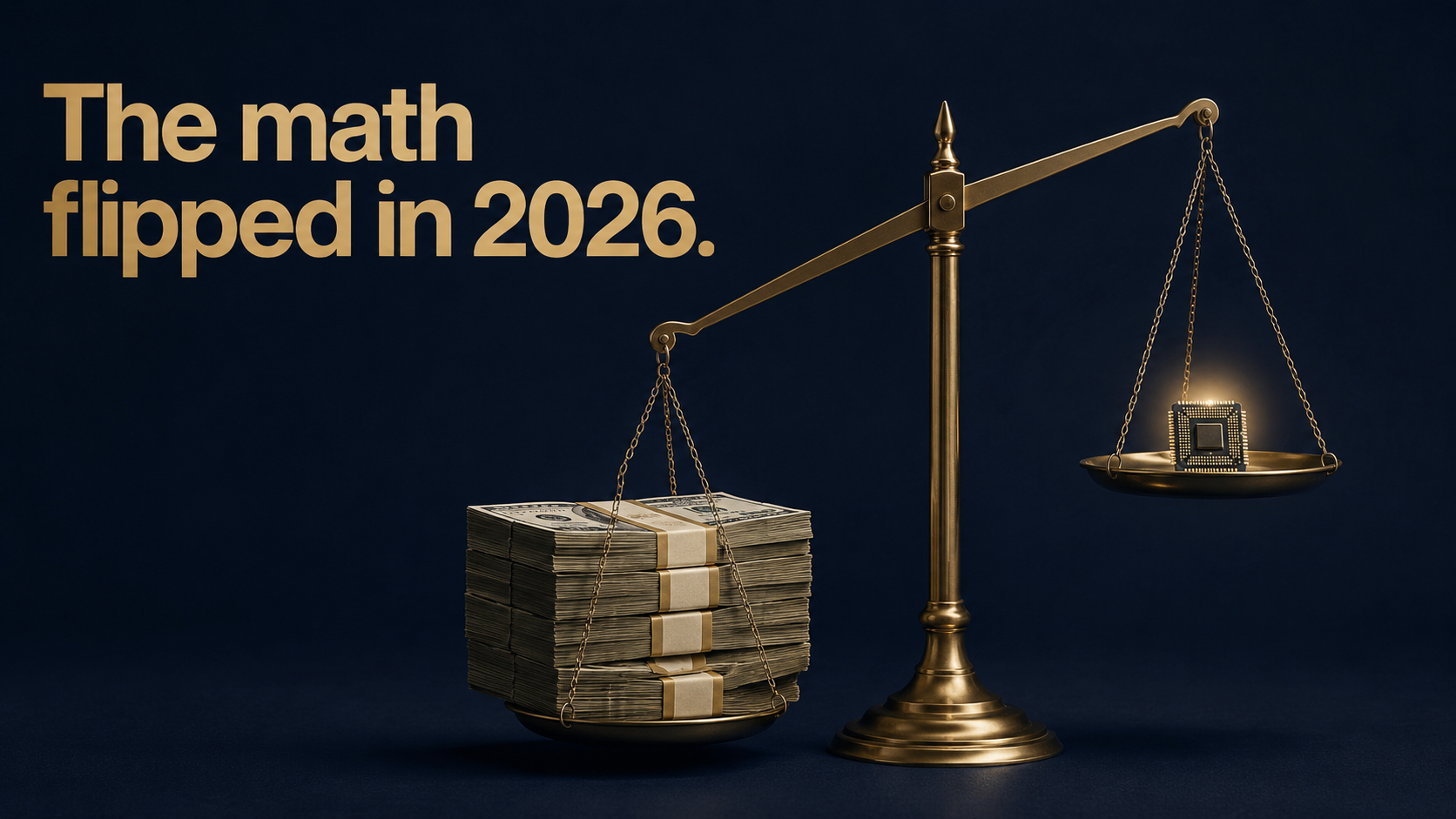
AI microdrama unit economics hinge on one number pair: a professional live-action vertical series runs $150,000 to $300,000 for 60 to 80 episodes, while a disciplined AI-native pipeline delivers the same episode count for $3,000 to $15,000. Both sell into the same market, estimated at $11 to $14 billion globally by Omdia for 2025 to 2026, through the same revenue mechanics. Here is the full season P&L, revenue side first, with the actual platform numbers.
Revenue mechanic 1: coin unlocks, the core engine
Coin platforms run mobile-gaming economics. Viewers get episodes 1 through 5 or 10 free, then pay roughly 18 coins, about $0.20 to $0.50, per episode. Finishing a typical 70 to 80 episode series costs a viewer $15 to $47 depending on platform and coin pack bonuses. The engine works: over 60 percent of global microdrama revenue is transactional or subscription per Omdia, with average revenue per paying user reaching $20 per week and up to $80 per month, figures that look like gaming whales because that is exactly the model. ReelShort and DramaBox alone split roughly 70 percent of global short-drama in-app spending, roughly $130 million and $120 million respectively in Q1 2025, and DramaBox booked a $10 million net profit in 2024, the first short-form platform to reach profitable scale.
Your share as a producer depends on your deal, covered below, but the viewer-side math is what matters for modeling: a series that converts 2,000 completing viewers at a $20 average spend generates $40,000 of gross unlock revenue for the platform to split with you.
Revenue mechanic 2: rewarded ads, the invisible second engine
Non-paying viewers are not worthless. Platforms monetize them with rewarded ads, watch an ad, earn coins, and effective CPMs on rewarded video in the US and UK run $15 to $40, versus $2 to $8 for standard pre-roll. The top three apps served roughly 5 billion rewarded ad impressions in 2024. Platforms typically cap redemptions around five per day, converting impatient free viewers into payers. For producers this matters in deal terms: series with strong completion drive both revenue pools, and acquisition teams increasingly pay engagement bonuses tied to exactly that.
Revenue mechanic 3: your own distribution stack
The same finished season also earns directly: YouTube long-form compilations at $2 to $12 RPM (far above the $0.02 to $0.13 of the Shorts feed), TikTok Creator Rewards at $0.40 to $1.00 per thousand qualified views on 1-minute-plus videos, and Facebook, which took the largest share, 25 percent, of US microdrama ad spend per eMarketer. These are floor revenues, modest per view but paid on a catalog you already own.
The worked P&L: one 80-episode AI season
- Costs: generation credits $2,500 to $8,000 (two-pass discipline, storyboard-gated), platform and tooling $500 to $1,500, music, voice, and finishing $500 to $2,000, contingency 15 percent. Call it $4,000 to $13,000 all-in.
- Conservative revenue case: a non-exclusive platform deal on revenue share yielding $6,000 to $15,000 over 12 months, plus $1,000 to $4,000 of owned ad-channel revenue. Season profit: roughly breakeven to 4x cost.
- Good case: a minimum guarantee acquisition in the low five figures plus revenue share overage plus ad floor. Season profit: 3x to 8x cost.
- The live-action comparison: the identical revenue outcomes against a $200,000 cost base are a catastrophic loss in the conservative case and a thin margin in the good case. Same market, same mechanics, inverted P&L.
Breakeven, stated plainly
An AI season at $6,000 breaks even on roughly 300 to 600 completing paid viewers at platform-typical spend and share rates, or one small licensing deal, or its ad floor alone in a decent year. A live-action season needs 30 to 60 times that. This is why portfolio strategy, ten AI seasons for the cost of one traditional pilot, is the rational 2026 play: hits pay for the catalog, and the catalog itself clears its costs. Producers building on storyboard-gated pipelines like MinionArts Vertex sit at the cost floor of this entire industry while selling into its fastest-growing revenue pool. The spread between those two lines is the business.
Sensitivity: the three levers that actually move the P&L
Model your season against three variables and ignore the rest. First, hook rate: the share of viewers surviving the opening seconds gates every downstream number, which is why financing analysts treat it as the metric a vertical series lives or dies on; a 10 percent hook improvement compounds through free-episode completion into paywall conversion. Second, paywall conversion: the fraction of free-block finishers who pay at episode 6 to 10. Doubling it doubles coin revenue with zero additional production cost, which is why the paywall episode deserves more engineering than any other. Third, deal structure: the same season under a pure revenue share versus a minimum guarantee can differ 2x to 4x in first-year cash. Notice what is not on the list: per-episode visual polish beyond the consistency bar. Above the quality floor, viewers convert on story mechanics, not render quality, and budgets that chase polish past that floor are buying margin reduction.
Where the cost side is actually won
The $3,000 to $15,000 AI season range is wide, and the spread is almost entirely iteration discipline. Storyboard-gated pipelines sit at the bottom of the range because mistakes get bought at image prices, roughly $0.03 to $0.10 per frame, instead of video prices at $0.50 to $2.00 per clip. Two-pass generation cuts spend 40 to 60 percent versus polish-as-you-go. Template reuse means season two's setup cost is near zero. This is where platform choice becomes a P&L line: on MinionArts Vertex, the storyboard gate, identity-pack anchoring, and episode-graph templating are the architecture rather than habits, which is why disciplined Vertex productions consistently land in the lower half of the cost range while holding the consistency bar that acquisition teams screen for. The cheapest season is not the one that generates least. It is the one that regenerates least.
The portfolio P&L: the real 2026 strategy
Season-level math is the wrong resolution for strategy. At AI cost structures, $60,000, one-third of a single live-action season, funds a 10-season catalog across genres. Model the portfolio honestly: three seasons roughly break even, five clear 2x to 4x, one dies, and one outperforms enough to attract a real MG or brand deal. That blended outcome, unavailable at any price in traditional production, is why studios and investors are entering this market now: the format's $11 to $14 billion revenue pool is growing faster than credible supply, and the portfolio producer is the only cost structure that can feed it profitably while surviving individual failures.
Reading platform economics from your side of the table
One more layer sharpens every deal conversation: understanding that the platforms themselves are still fighting for margin. ReelShort processed roughly $1.2 billion in gross consumer spend in 2025 and remained loss-making on aggressive user acquisition, while DramaBox's $10 million profit on $323 million of 2024 revenue shows how thin platform margins run after acquisition costs. This is not trivia; it is negotiating context. Platforms losing money on customer acquisition are structurally desperate for content that converts the users they already paid for, which is why completion and paywall metrics command bonuses, and why a producer whose season demonstrably converts is negotiating with a buyer who needs the deal too. It also explains the licensing-fee compression at free, ad-funded platforms like ByteDance's Melolo: no unlock revenue means less to share. Match your season to the platform whose economics reward what your content does best, and the P&L above improves one deal at a time.
Common questions, answered fast
What is a realistic first-season profit? Breakeven to 3x cost across twelve months; the portfolio, not the pilot, is the business. Does higher generation spend improve revenue? Only up to the consistency floor; past it, story mechanics drive conversion. When does a season stop earning? Catalogs in this format show long tails across platforms and territories, which is why perpetual exclusives are the worst trade in the industry. What single number should I optimize first? Hook rate, because every other number in this article sits downstream of it.
Run the math on your own season. Build one storyboard-gated episode on MinionArts Vertex, multiply your actual per-episode cost by 60, and put it next to the revenue mechanics above. Start the calculation at minionarts.com.