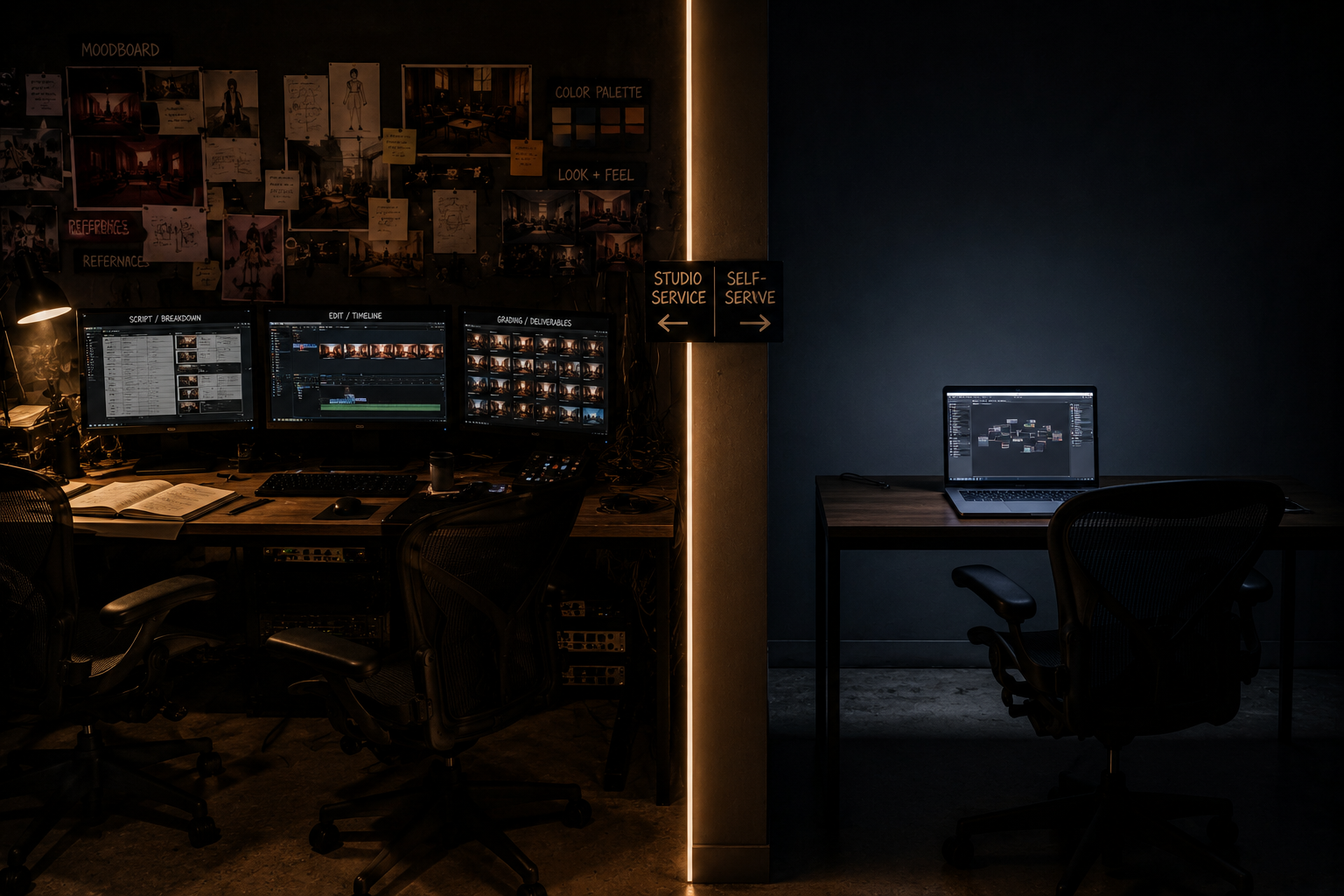
AI microdramas are made by converting a serialized script into structured scene prompts, then running those prompts through a chained pipeline of generative models: image models for characters and locations, video models for shots, lipsync and voice models for dialogue, and music and SFX models for sound. In 2026, the teams shipping at volume no longer run these tools separately. They orchestrate the entire chain as a single node-based workflow, which is how a crew of two or three people now produces 60-episode vertical seasons that once required a full studio.
Why pipeline beats tools
A single microdrama season is a volume problem. Sixty episodes at 90 seconds each is roughly 90 minutes of finished video, typically built from 400 to 700 individual generated shots, each needing consistent characters, synced dialogue, and a soundtrack. Running that through disconnected tools means exporting and importing assets hundreds of times, losing character consistency between steps, and rebuilding the same setup for every episode. The Chinese studios releasing more than 10,000 AI titles per month, per DataEye tracking, solved this by industrializing the chain. The same logic applies whether you produce ten thousand titles or one: the pipeline, not any single model, is the product.
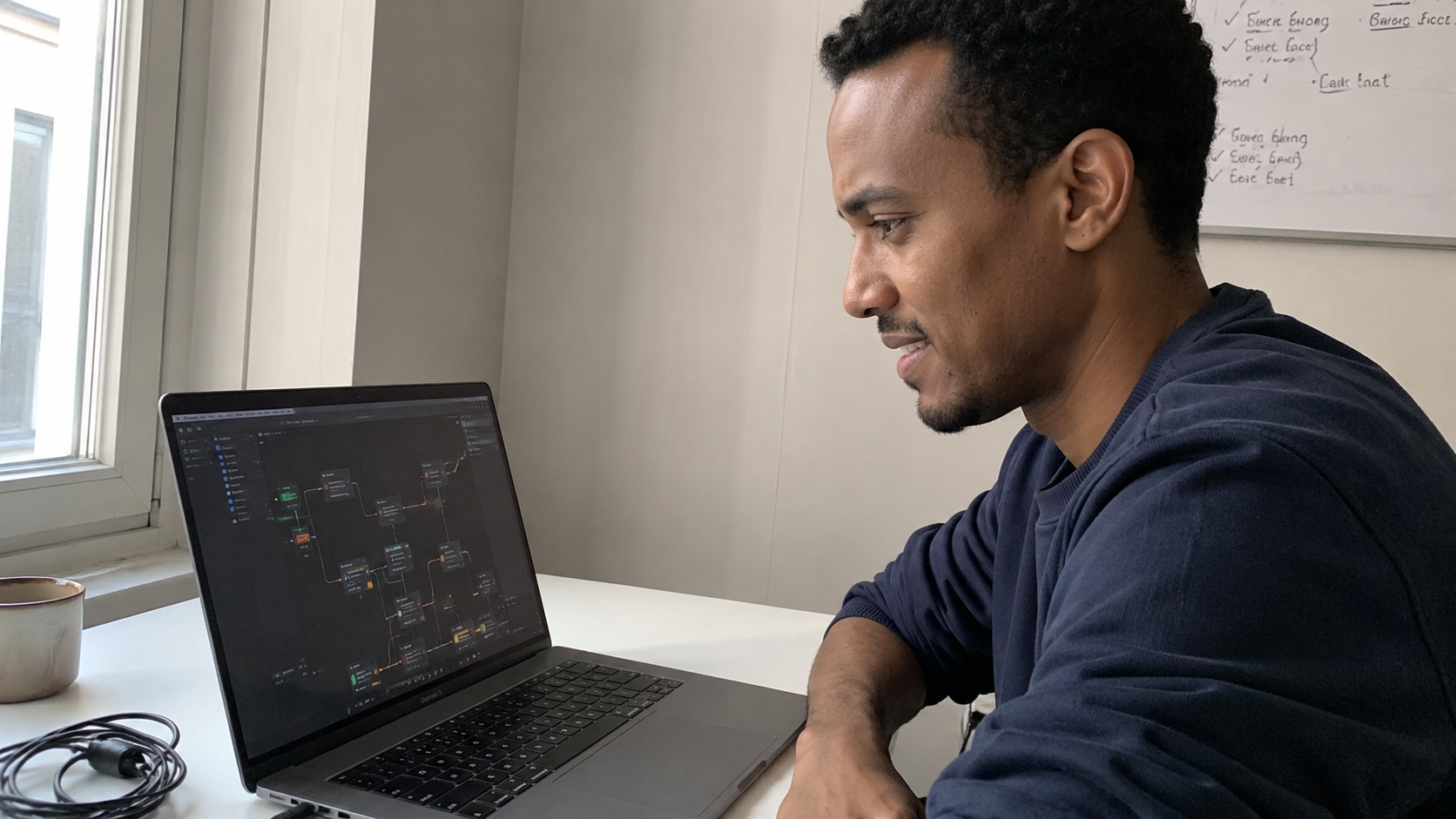
This is the design principle behind the MinionArts Vertex canvas. Every stage below exists as a node. Nodes connect into a directed workflow, the workflow exports as JSON, and the JSON re-runs for episode 2 through episode 60 with only the script inputs changing.
Stage 1: Script and beat structure
Microdrama scripts are engineered backwards from the format's retention math. The first emotional spike must land within 15 to 30 seconds of episode one, and every episode must end mid-tension, because the cliffhanger is what converts a free viewer into a paying one. In practice, writers produce a season bible (characters, arcs, the placement of major reveals around the paywall, which typically falls after episode 5 to 10) and then a per-episode beat sheet. An LLM pass converts each beat sheet into structured scene descriptions: shot type, characters present, location, action, dialogue lines, and emotional register. That structure matters, because everything downstream consumes it as data, not prose.
Stage 2: Character and location lock
Before any video generates, the production locks its visual canon. Image models generate each lead character from multiple angles and expressions, plus every recurring location, creating a reference library. This is the single most important stage in AI microdrama production, because audiences forgive simple sets but not a protagonist whose face drifts between episodes. On Vertex, the reference library feeds image generator nodes downstream, so every shot in every episode pulls from the same locked identity assets. Character consistency across 50 plus episodes remains the hardest technical problem in this format, and we cover it in depth in a dedicated guide.
Stage 3: Shot generation
Each scene description becomes one or more video generations, almost always image-to-video rather than text-to-video, anchored on a reference frame to hold identity. Model choice in 2026 is a routing decision, not a loyalty decision. Production teams route by scene type: Kling 3.0 for controllable cinematic motion and multi-shot sequences, Seedance 2.0 for dialogue-heavy scenes where its phoneme-level lipsync and unified audio-video generation shine, Veo 3.1 when realism and native audio at high resolution justify premium per-second pricing. Vertical 9:16 output is now native across the leading models, which removed the cropping workarounds that plagued 2024-era pipelines.
On the Vertex canvas this stage is a set of parallel video generator nodes fed by the scene JSON, with model routing configured per shot type. Reported usable-take rates above 90 percent in mature Chinese pipelines are achievable only with this kind of structured prompting; loose prose prompts waste credits on unusable takes.
Stage 4: Dialogue, lipsync, and voice
Dialogue runs on two paths. Where the video model generates native speech, the line goes into the generation prompt directly. Where it does not, a voice model such as ElevenLabs generates the line per character (multilingual casts are now standard, and mixed-script methods make Hindi, Hinglish, and other non-Latin languages production-ready), then a lipsync node maps the audio onto the generated face. Voice consistency is handled the same way as visual consistency: each character gets a locked voice ID in the pipeline, referenced by every episode.
Stage 5: Music, SFX, and assembly
Music models generate a small library of recurring cues (tension, romance, betrayal, cliffhanger sting) rather than per-episode scores, because sonic repetition builds the series identity that keeps binge sessions moving. SFX nodes add the slaps, door slams, and gasps the genre demands. An assembly step sequences shots, mixes audio layers, burns in subtitles (essential, since most viewing happens with sound situational), and exports the vertical master. Editing nodes on the canvas handle trims and merges so the episode never leaves the pipeline before delivery.
Stage 6: The repeatability layer
Here is where node-based production separates from tool-hopping. On Vertex, the finished episode workflow exports as a JSON template. An Interface Form sits on top of it, exposing only the variables that change per episode: script beats, scene list, episode number. The Director Node, an agentic layer, can take a full season beat sheet and run the pipeline episode by episode with a human approving outputs rather than operating tools. That is the structural reason AI microdrama economics work: the first episode costs you the pipeline build, and episodes 2 through 60 cost only inference and review time. Vigloo's six-week, 90 percent cheaper AI series and the broader one-tenth-of-live-action cost figures reported out of China both come from exactly this template logic.
What a realistic production timeline looks like
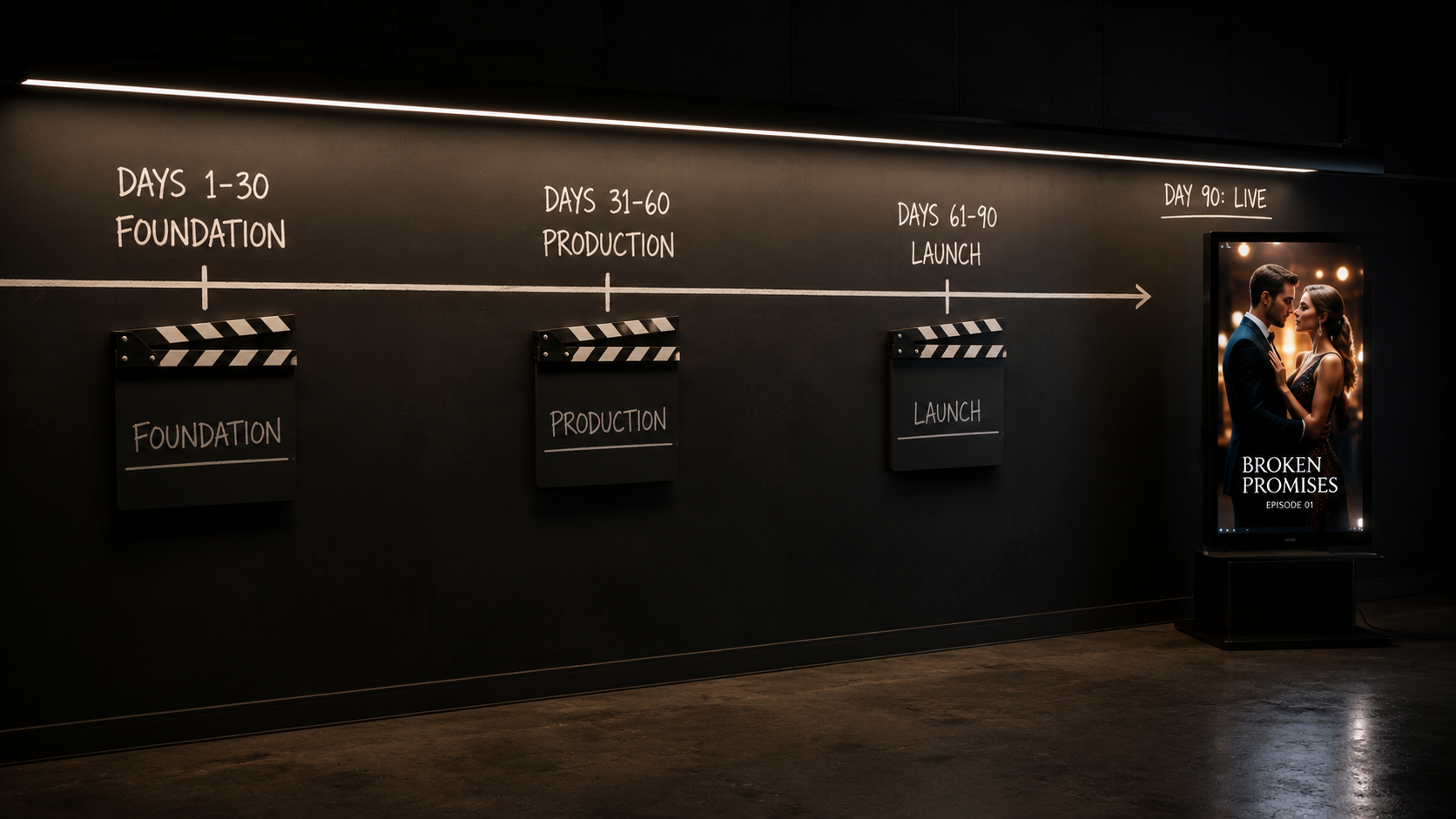
For a two-person team in 2026, a credible schedule for a 60-episode season is: one week for the season bible and beat sheets, three to four days for character and location lock, two to three weeks of shot generation and review running in parallel batches, and one week of assembly and QC. Five to six weeks end to end, which matches the public benchmarks set by early AI-native productions. Compare that with the 7 to 12 day shoot plus post of a live-action vertical season at under $300,000, and the trade becomes clear: AI swaps location logistics and cast scheduling for prompt engineering and review discipline.
Start with the pipeline, not the prompt
The most common mistake new producers make is opening a video generator and prompting episode one, shot one. The teams winning in 2026 design the workflow first. If you want to skip the infrastructure build, the MinionArts Vertex canvas ships with exportable JSON workflow templates you can adapt into a full microdrama pipeline, from script ingestion to vertical master, on one screen. Build the system once. Then let the season run through it.