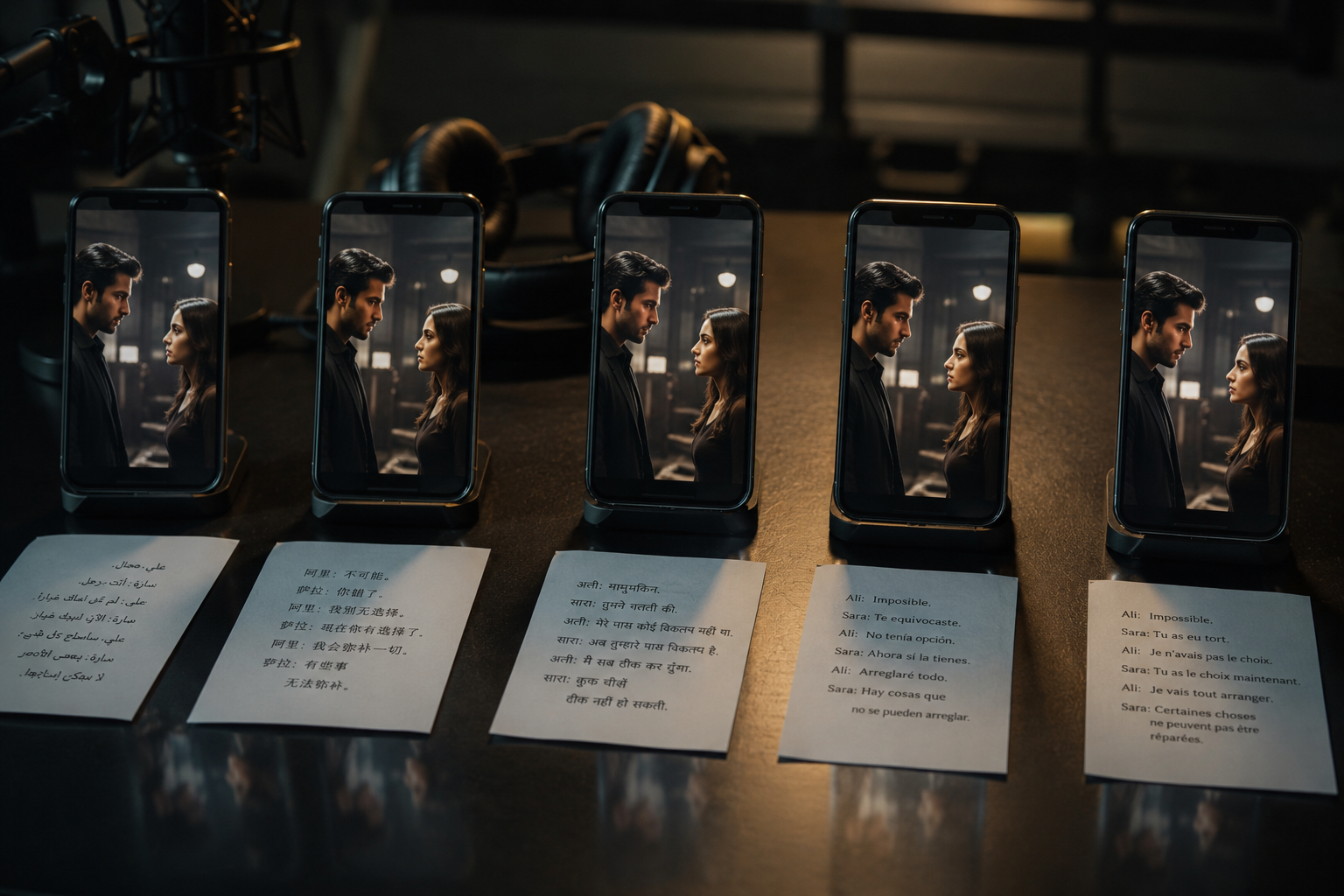
AI microdrama localization is the process of releasing one produced season in multiple languages by transposing the script culturally, generating dialogue with each character's cloned multilingual voice ID, and re-running lipsync per language, so a single 60 episode season becomes inventory in five or more markets. As of 2026, this is the highest-leverage move after a season ships: Omdia puts microdrama revenue outside China at $3 billion, microdrama apps drove 733 million global downloads in Q4 2025, and platforms like ReelShort and DramaBox operate across markets that all need supply. Localization costs a fraction of production and multiplies the same asset.
Why Localization Beats Producing a New Season
A localized season reuses everything expensive: the story architecture, the character locks, the generated footage, the edit. What changes is the dialogue layer and on-screen text. In a format where AI production already runs at roughly one tenth of live-action cost, localization compresses further, because video generation, the dominant cost layer, is untouched. The revenue side is uneven by design: the United States accounts for roughly half of international microdrama revenue at about $1.5 billion, but Japan, Korea, Latin America, and Southeast Asia are growing from a lower base with far less localized supply, which is exactly where an early localized catalog compounds.
Layer 1: Script Transposition, Not Translation
Literal translation kills microdramas because the genres run on cultural tropes. A billionaire contract-marriage arc, a revenge reveal, a werewolf hierarchy: each has market-specific conventions for how status, family pressure, and romance beats read. Transpose names, settings referenced in dialogue, and idioms while keeping the beat map untouched; the cliffhanger positions from our script structure guide are language-independent, which is what makes the format so localizable in the first place.
Layer 2: One Character, One Voice, Every Language
The 2026 standard is cloned multilingual voice IDs: the same character voice speaking Japanese, Spanish, or Portuguese, rather than a different dub actor per market. Voice continuity across languages preserves the parasocial attachment that the coin-unlock model monetizes. Lock the multilingual voice at casting time alongside the primary voice ID, exactly as described in the voice layer of our AI microdrama tool stack guide.
Layer 3: Re-Sync, Not Re-Generate
Localized dialogue runs longer or shorter than the original, so every dialogue shot gets a lipsync pass in the target language while non-dialogue shots ship untouched. The craft rules that protect the original protect the localization: lines under two sentences per shot, cutaways during longer speeches, ambient beds under every dialogue scene. Budget the localization pass per language at the dialogue-shot count, not the episode count, since a typical 90 second episode carries 4 to 8 dialogue shots.
Market Priority Order for 2026
| Priority | Market | Why now |
|---|---|---|
| 1 | English (US) | Roughly half of international revenue, highest coin ARPU |
| 2 | Japanese | High-paying vertical drama audience, thin AI-native supply |
| 3 | Spanish and Portuguese (LatAm) | Massive download growth, low localized inventory |
| 4 | Korean | Format-native audience, platform commissioning active |
| 5 | Indonesian and Thai | Fastest download growth in Southeast Asia |
Platform payout mechanics differ per market as well; revisit how microdrama platforms pay producers before choosing where a localized season lands first, and match each language build to platform requirements from our ReelShort vs DramaBox vs PineDrama comparison.
Localization as a Workflow, Not a Project
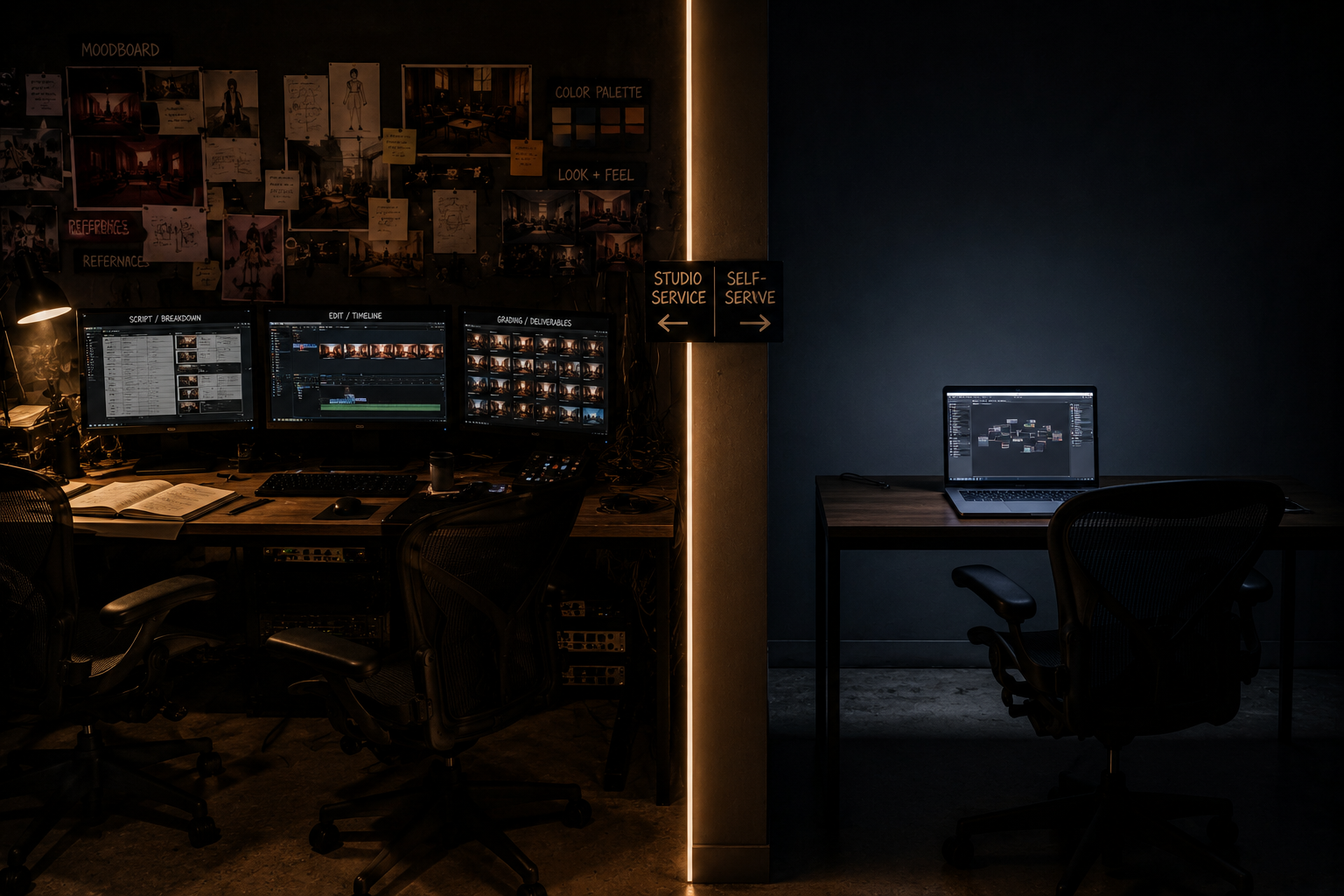
Manually re-dubbing 60 episodes per language is a project. Structurally, localization is a parameter change: same episode graph, different language input on the voice and lipsync nodes. On the MinionArts Vertex canvas, a localized season is a re-run of the season workflow with the language and voice ID swapped while every character lock, edit, and music cue persists, and the AI Director agent carries each episode through re-sync and assembly without manual re-stitching. That is the difference between localization taking a quarter and taking a week per language, and it is why the full pipeline in our complete AI microdrama production playbook treats language as a variable from day one.
FAQ
How much does it cost to localize an AI microdrama season?
A fraction of production, because video generation is untouched. Cost scales with dialogue-shot count per language: script transposition, voice generation, and lipsync re-sync passes.
Should I dub or subtitle a microdrama?
Dub. Vertical full-screen viewing leaves little room for subtitles, and the paying audience treats dubbed dialogue as the format standard in 2026.
Which language should I localize into first?
English if you produced for another home market, then Japanese and Latin American Spanish and Portuguese, where paying audiences are growing faster than localized supply.
Does localization change the episode structure?
No. Beat maps, cliffhanger positions, and paywall placement are language-independent. Only dialogue, on-screen text, and cultural references change.