To plan a 60 episode AI microdrama season, you lock the season beat sheet and asset library in week one, then produce in five batches of 10 to 12 episodes on a weekly cadence, tracking every episode through six pipeline states from scripted to shipped. As of 2026, a two to three person team on a repeatable workflow completes a full season in four to six weeks, which is the schedule platforms increasingly expect from AI-native suppliers. This guide is the operating system for that schedule: batch structure, team roles, tracking, and the failure points that blow up timelines.
Why Batches, Not Episodes
Producing episode by episode rebuilds context 60 times. Producing in batches amortizes it: one scripting pass, one generation run, one QC pass, one delivery per 10 to 12 episodes. Batching also matches how platforms release, since seasons drop in tranches behind the paywall, and it creates natural checkpoints to react to early retention data before the full season is spent. The math compounds: when a new AI-generated title was going live on Chinese platforms every 90 seconds in January 2026, cadence became the competitive variable, not capability.
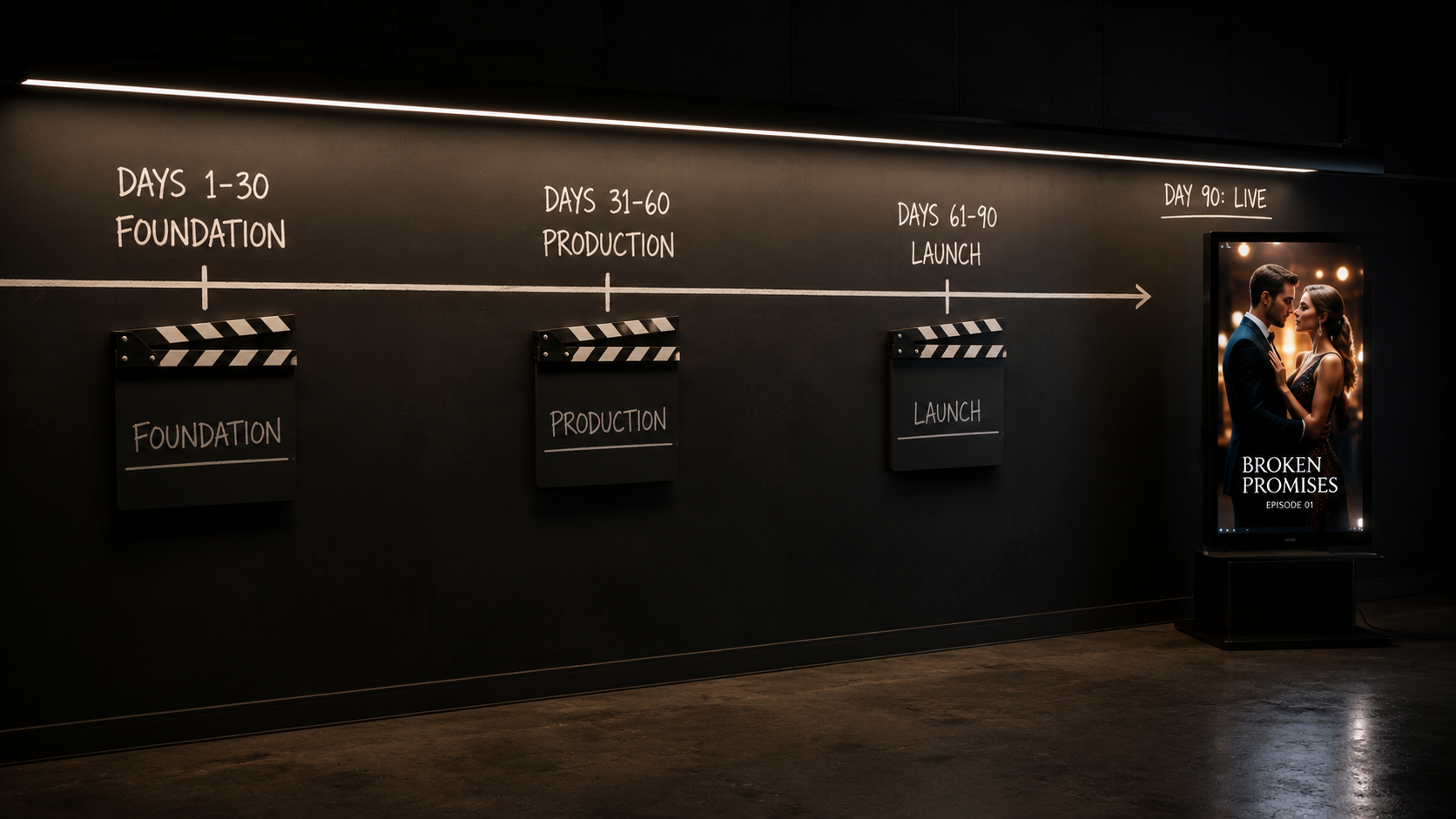
The Six-Week Season Template
| Week | Milestone | Detail |
|---|---|---|
| 1 | Season lock | 60 episode beat sheet, character and location bibles, voice IDs, style frame |
| 2 | Batch 1 (ep 1 to 10) | Free act, highest polish, pilot QC gates set here |
| 3 | Batch 2 (ep 11 to 22) | First paid tranche, opens on the season's first major reveal |
| 4 | Batch 3 (ep 23 to 34) | Mid-season false victory arc |
| 5 | Batch 4 (ep 35 to 47) | Reversal cycle, cliffhanger rotation audit |
| 6 | Batch 5 (ep 48 to 60) + delivery | Resolution, sequel hook, platform packaging |
The Six Pipeline States
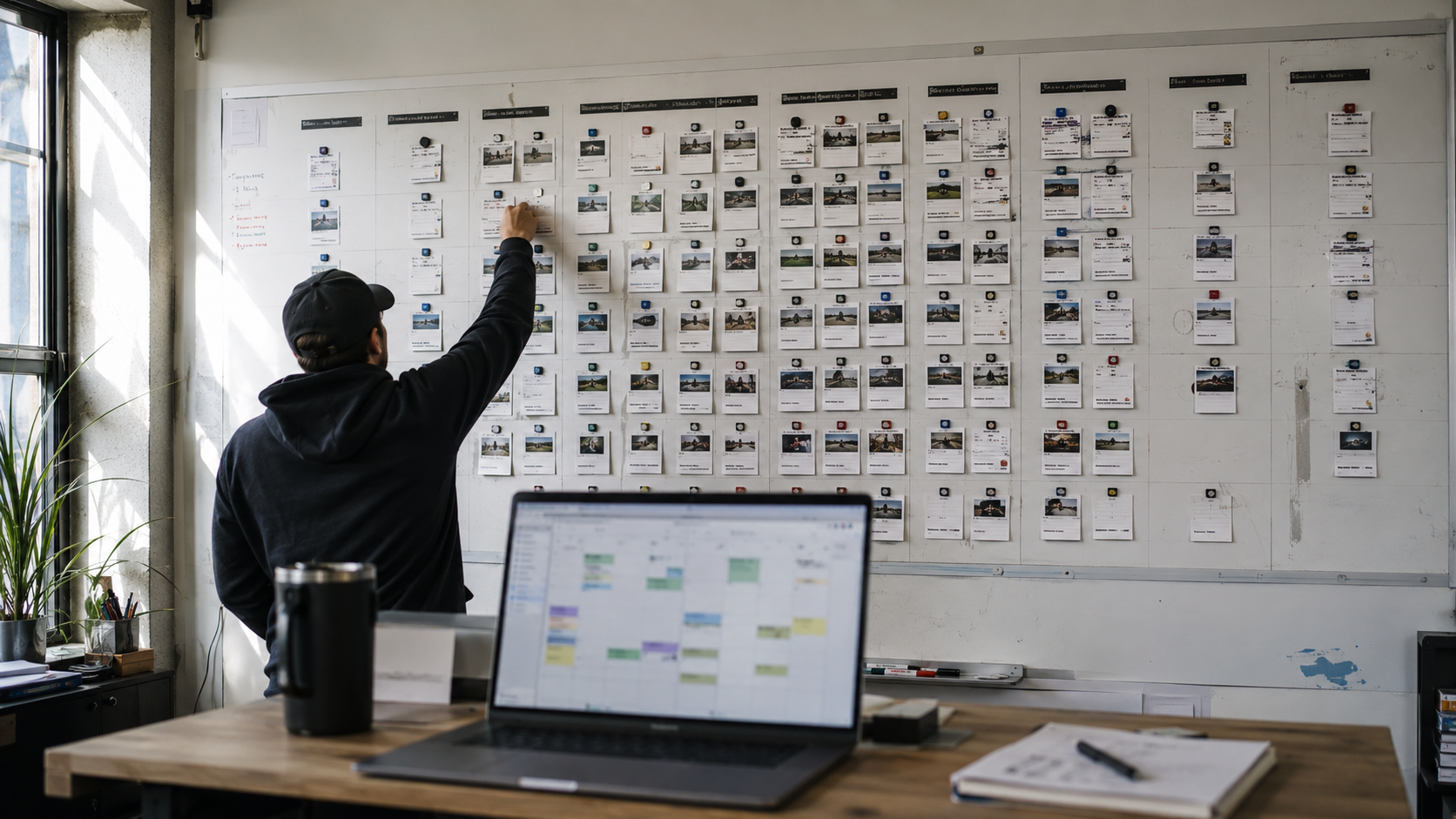
Every episode moves through the same states: scripted, prompted, generated, assembled, QC passed, shipped. Track all 60 on a single board with one row per episode. The moment an episode sits in generated for more than two days, something upstream is broken, usually an under-specified scene block or a character reference that is failing on a specific shot type. State tracking is what turns a creative project into an operable pipeline, and it is why we describe microdrama production as an infrastructure problem: on the MinionArts Vertex canvas, batch runs move episodes through these states as workflow executions rather than manual handoffs, with the AI Director agent carrying each episode from generated to assembled without re-stitching by hand.
Team of Two to Three: Who Does What
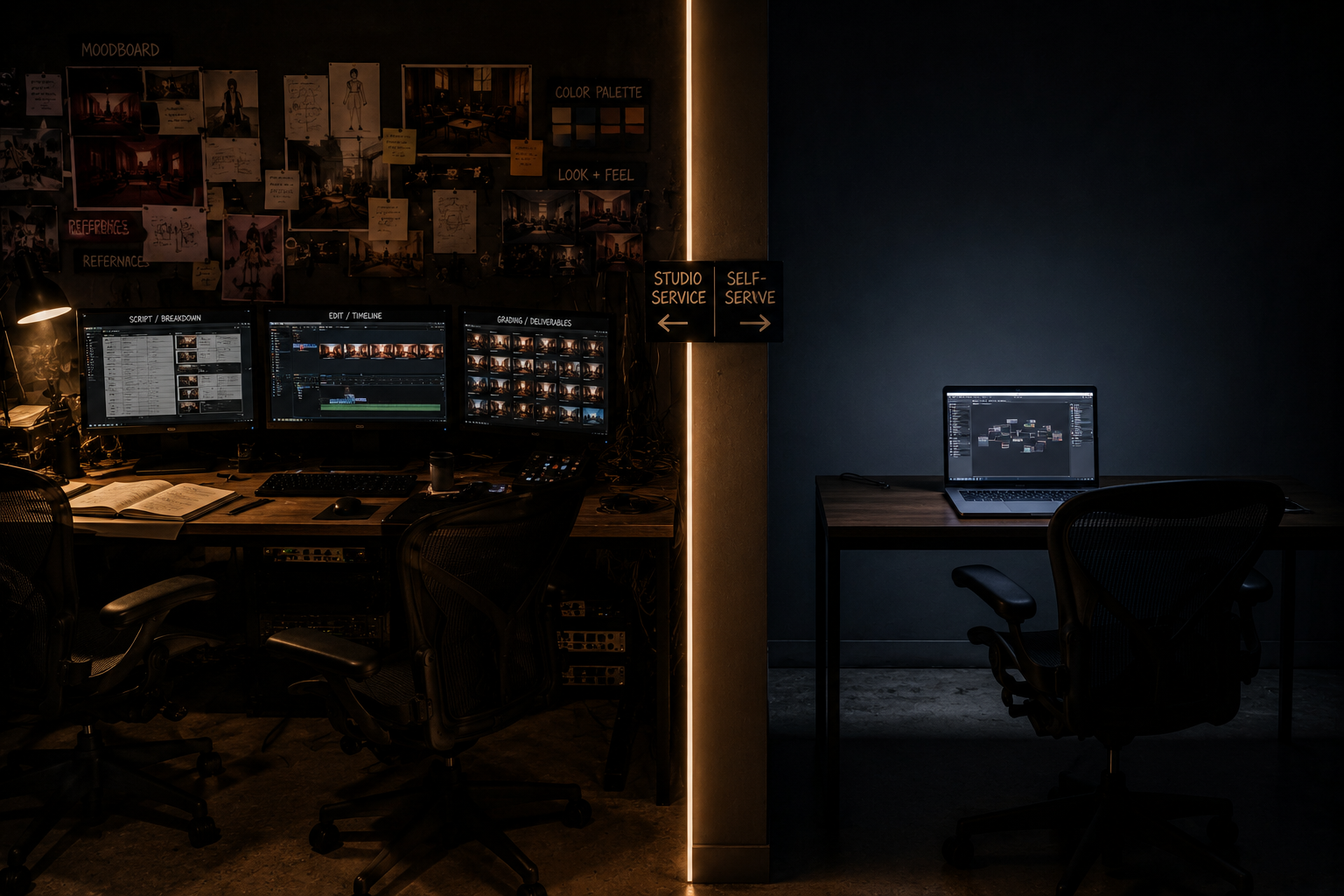
The minimum viable season team is a story lead who owns the beat sheet, scene blocks, and cliffhanger rotation, a production lead who owns generation runs, model routing, and assembly, and a floating QC role (often shared) who owns drift review and platform spec compliance. One person can pilot; sustained 60 episode output without burnout starts at two. Everything the story lead needs is in our script structure guide, and everything the production lead needs is in the tool stack guide and character consistency system.
Budgeting the Season
Plan generation spend per batch, not per season, and hold a 25 percent retry reserve for batch one while your prompt structure calibrates; usable footage rates above 90 percent are achievable, but rarely in week one. AI production runs at roughly one tenth of live-action microdrama cost, and live-action seasons already ship for under $300,000 in 7 to 12 day shoots. Detailed per-episode math by budget tier is in our cost breakdown, and revenue-side planning is in the microdrama economics guide.
The Three Schedule Killers
Seasons blow up in the same three places. First, generating before the season is locked, which guarantees regeneration when episode 40 contradicts episode 12. Second, unlocked characters, which turns QC into a regeneration marathon. Third, treating assembly as manual editing instead of a workflow, which caps throughput at whatever one editor can click through. All three are solved before production starts, which is the entire argument of our complete AI microdrama production playbook.
FAQ
How long does a 60 episode AI microdrama season take?
Four to six weeks for a two to three person team on a batched pipeline: one week of season lock, then five weekly production batches.
How many episodes should be in each production batch?
10 to 12 episodes. Smaller batches waste setup time; larger batches delay QC feedback until too much footage is committed.
What should I track during season production?
Every episode against six states: scripted, prompted, generated, assembled, QC passed, shipped. One board, one row per episode.
How big a team do I need for a microdrama season?
Two to three people: story lead, production lead, and shared QC. Solo works for pilots, not sustained seasons.